
The WNBA is seeking to register “The W” for clothing and apparel items, including sports jerseys, hoodies, t-shirts, caps, footwear, and pants. In response, the Chicago Cubs—who have raised a “W” flag following home victories since the 1930s—and the Washington Nationals, whose primary logo features a curly “W,” filed a joint opposition right before the deadline. Below are the logos included in the Notice of Opposition.
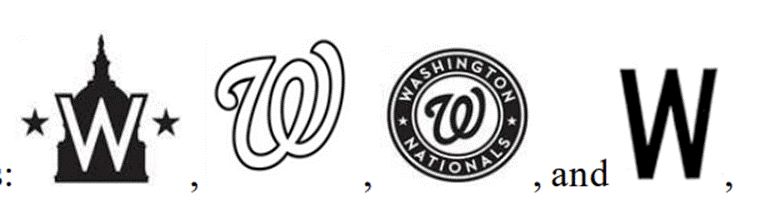
Cue the dramatic headlines predicting an intense trademark battle.
In reality, the dispute will almost certainly be resolved through negotiation rather than litigation. Attorneys for both sides will likely set clear boundaries: the WNBA will avoid baseball-related marketing and refrain from using a standalone “W,” while the MLB teams will avoid branding gear with “The W.” All parties will agree on specific styling guidelines for the letter. Indeed, reports indicate that the teams and the league are already defining these terms to reach an amicable agreement. (Notably, the Cubs and Nationals likely already have a coexistence agreement, given the higher potential for confusion between two baseball franchises.)
This type of legal resolution is called a coexistence agreement, and it settles a large portion of trademark conflicts. However, because it’s a permanent commitment, business owners often sign without fully understanding the rights they are waiving.
What a Coexistence Agreement Does
Two parties with similar marks agree, in writing, on how each will use its mark so consumers won’t be confused. Typical terms cover:
- Goods and services. You sell software, they sell furniture, and each side promises to stay in its lane. Notably the Cubs and Nationals didn’t oppose the WNBA’s earlier filing for entertainment services, nor for “WELCOME TO THE W“ for shirts. They only objected when the league reached for “THE W” on apparel, where the teams live.
- Geography. Common with restaurants, gyms, and local services. You take the Northeast, they take the Southwest.
- Channels. Retail versus wholesale, online versus in-store.
- Logo treatment. Specific colors, fonts, or design elements one side agrees never to use.
- Digital presence. Explicit rules covering domain name ownership, website URLs, and social media handle usage to prevent online overlap.
- Policing and enforcement. Requirements to cooperate when challenging infringing third parties and commitments not to challenge each other’s rights.
- Dispute resolution. Mandatory notice periods, mediation, or private arbitration mechanisms before either party can file a lawsuit.
- Notice. A commitment to tell each other before expanding into new territory or products.
Done well, it ends a dispute for a fraction of the cost of litigation and lets both businesses get back to work.
Where It Backfires
Three problems show up years later, usually when the business has grown.
- It boxes in your future. The agreement you signed as a two-person startup still binds you at 200 employees. If you promised to stay out of a product category or a region, that promise doesn’t expire when it becomes inconvenient. I’ve seen owners discover a decade-old agreement right as they planned an expansion, and the answer was no.
- It can be used against you. Brand dilution risks. Allowing another business to use a similar mark in the marketplace can weaken the distinctiveness of your brand over time, potentially eroding customer goodwill and market strength. When you later go after a third copycat, their lawyer will wave your agreement around: “You already admitted your mark can coexist with a similar one, so it’s weak.” That argument doesn’t always win, but you handed them the ammunition.
- The USPTO doesn’t have to accept it. If your application was refused over a prior registration and you bring the examiner a consent agreement, the examiner will give it real weight, but only if it explains why confusion is unlikely. A one-line “we both agree” is what the USPTO calls a naked consent, and it carries little weight. The agreement needs to spell out the differences in goods, channels, customers, and trade dress, and what each party will do to keep it that way.
- Compliance and monitoring burdens. Entering into an agreement requires active oversight. You must continuously monitor the other party’s usage and ensure your own operations adhere strictly to the negotiated boundaries.
- Complications in corporate transactions. Potential buyers or investors will review these agreements during due diligence. Restrictive covenants can decrease company valuation or create friction during mergers, acquisitions, or financing rounds.
When to Walk Away
Sometimes the right answer is no deal. If the other party’s use is likely to grow into your space, if your mark is the stronger one and you have priority, or if the concessions they want would cut off your most likely growth path, you may be better off opposing, litigating, or rebranding on your own terms. A coexistence agreement should reflect the future you want, not just the dispute in front of you.
Get It Drafted Right
If someone with a similar name has reached out, or you’ve hit a refusal and the other side is willing to talk, the agreement is only as good as what’s in it. We negotiate and draft these with your next ten years in mind. Call us today at (888) 666-0062 or click here to schedule your initial Discovery and Strategy Session online.
DISCLAIMER: The information contained in this article is for informational purposes only and is not legal advice or a substitute for obtaining legal advice from an attorney.